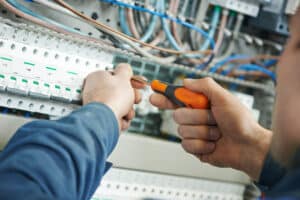
Stripping large-gauge wire by hand takes forever, and if you’ve tackled it with the wrong tool, you know how quickly things fall apart. A dull blade dragging against 4/0 AWG insulation isn’t just slow, it’s dangerous. So you don’t really need to ask whether a dedicated tool matters; the question is finding the right one for your crew.
This piece walks through the tools electricians actually grab on large-gauge jobs, what makes a good stripping tool different from a frustrating one, and how to pick the right match for whatever wire size you’re handling.
The Right Tools for Stripping Large-Gauge Wire Quickly
Electricians working with large-gauge conductors (4 AWG and larger) stick to a short list of proven tools. A solid power wire stripping machine tops the list on production jobs, where speed and consistency beat saving a few bucks on equipment. The right tool cuts clean through thick insulation in one pass, leaves the conductor underneath untouched, and gets you to the next connection with confidence.
Rotary Strippers for Thick Conductors
Rotary wire strippers spin a blade around the insulation, scoring it evenly across the whole circumference. You set the blade depth upfront; that’s your safety net against nicking the copper or aluminum underneath. Most rotary models work from 10 AWG down to 750 kcmil, exactly the range you need for service entrances, feeders, and underground runs.
The speed difference is noticeable. You’ll strip a 2/0 AWG conductor in under ten seconds with a rotary tool; a manual knife takes thirty seconds or longer. On fifty terminations, that time adds up.
Automatic Wire Stripping Machines
Automatic machines go beyond rotary hand tools. Feed the wire in, dial in strip length and gauge, and you’re done. No hand pressure, no adjustment. Commercial electrical shops love these for panel builds or prefab work, especially when they’re processing the same conductor size in volume.
But they cost money. A benchtop automatic stripper runs $150 to $800, depending on gauge range and construction quality. That investment pays off for shops running production daily; it doesn’t for a single residential service upgrade.
Lineman’s Knife and Ringing Technique
The lineman’s knife isn’t outdated. It’s still your fastest option in the field when power tools aren’t an option. Ringing means scoring the insulation around the circumference (light pressure, not into the conductor), then pulling the sleeve off by hand.
This takes practice. Electricians who do it regularly learn the exact pressure needed for each insulation type. THHN, XHHW, and URD all behave differently under a blade; that’s the trick. Not fast for volume work, but it works when you’re alone in a trench finishing a service lateral.
How to Choose the Best Tool for Your Job
Three things drive the right choice: the gauge range you work with most, what kind of jobs you do, and how often you strip large-gauge conductors.
Matching the Tool to Gauge Range
Not every stripper covers every gauge. Most manual wire strippers max out at 6 AWG or 8 AWG, leaving you short for service conductors. Before buying, verify the tool’s rated range and confirm it handles the largest conductor you run on a regular basis. A stripper rated to 4/0 AWG won’t help if your spec sheet calls for 350 kcmil.
Field Work vs. Shop Work
Field electricians reach for portable tools: a compact rotary stripper, a lineman’s knife, or a heavy-duty manual stripper with wide jaws. Shop electricians and prefab crews benefit more from a benchtop machine that handles volume without wearing out your hands. The portability trade-off matters; buy for wherever you’ll actually use it most.
Blade Quality and Insulation Type
Blade material counts more than you’d think. Cheap blades dull fast on XLPE or armored cable jackets. Look for hardened steel blades and replaceable cartridges, especially if you work with direct-burial or service-entrance cable often. A dull blade needs more pressure, which is exactly how you nick conductors and fail inspections.
Conclusion
Electricians strip large-gauge wire quickly by matching job type to the right tool: rotary strippers for field speed, automatic machines for shop production, and a sharp lineman’s knife for single cuts in the field. Gauge range, job volume, and blade quality always come back into play. Buy for the actual work you do, and you’ll waste less time wrestling with insulation and more time making clean, safe terminations.
Read more:
What Tools Do Electricians Use to Strip Large-Gauge Wire Quickly?